Showing posts with label academic. Show all posts

Tuesday, July 9, 2024

Are panto actors too posh?

Not all actors are posh, obvs.  Dame Judi Dench is common as muck, it’s the rest of the ne’erdowells that need to rough up a bit… the hoity toity rum-buggers.


Dame Judi playing Sir Ian MacKellen playing Dame Twankey Trott
St Margaret-le-Basset's adult panto: Witt Dickington Pussy (1976) 
Photo courtesy of Mr Eddie Hall Esq.


And don’t read this thinking: “well he can’t mean me… I can only afford Starbucks twice a week.”  I do mean you… well most of you.  About 90% of the arts columnists at the Grauniad are to be believed.  They don’t exactly say how that data is compiled.  Presumably the methodology is somewhat more than “Q1. Do you get out of the bath to have a wee?” followed by two tickboxes: “Yes” and “No - I come from Wolverhampton.”  But however they came to the figures, you can read all about it here.


The truth of this finding prompts several questions:


1. Why is it happening?


2. Why does it matter?


3. What can be done about it?


Why is it happening?


I'm sorry to break it to you all, but acting is not a money-making career path.  


Unknown Musical Theatre Graduate aged 23


OK, if you line up all the actors in the world, there is the odd multi-millionaire... but they're exactly that - odd.  


Most jobbing actors are just struggling to get by.  Saying you are 'an actor' is as close as dammit to saying you are a barman/barista/kids-party-princess who goes to auditions twice a week.


When I graduated from RADA, the statement: I am an actor, was always met with the question: "What is your muggle job?"  NB a lot of the new grads coming out of training just call it their "non-acting job" out of a general sense of embargoing JK Rowling... time marches on.


For many actors, the hard graft and sparse castings eventually drum them out of the industry into better paid jobs that don't demand you be available to travel into central London with 12 hours notice.  


"I'm late... I'm late..." said the Rabbit.
"Late for what?" asked Alice.
"For my third callback for Villager 3!"


Neil Griffiths from Arts Emergency hits the nail on the head: “Creativity and culture are not like other industries. The power of networks and connections is multiplied. And you can’t talk about diversity if you’re not making the workers secure. Testimony from the frontline is people drop out, they find it hard to progress.” Translation: It's who you know, not what you know. And if you're not in the right social circles, good luck getting a foot in the door.


In terms of workforce demographics this means that the older you are, the less competition you face. Princes are ten a penny, but Aldermen are hard to find.


In this Uber-competitive workplace, telling your kid "go and be an actor" is often just middle-class-speak for "take five years out to try something you love, and if you don't get any big parts, mummy and daddy will bail you out."  For poorer families, this can seem like a luxury they can ill-afford.


In this way, the dilemma facing working class families mirrors that facing many first generation immigrant families.  It's no wonder that families from immigrant communities don't send their kids to drama training at the same rate as indigenous white families.  If you're going to uproot your life and move to a new country, are you really going to tell your kids to gamble on a precarious career path?  More likely you'll be chivvying them along to medical school or a BEng at the best redbrick their grades will allow.


All other things being equal, a glut of middle class actors dominating the industry is a natural consequence of the glut of middle class kids entering into training.  Ipso facto.  Veni, vedi, vici.  Chum ba wumba. 


Caesar: Emperor, Salad, Dog Food. 

Why does it matter?


The ethical pragmatist in me wants to say it doesn't matter.  We're all in charge of our own lives... if you want to be an actor, it's up to you, and if you don't want to be an actor, you don't have to be.


OK, so Britian's got a lot of middle class actors.  So what?  We've also got a lot of gay hairdressers but nobody's busting a gut trying to get straight men into beauty schools.


"Ah, BUT..." you might say. "Working class people need to be represented on stage.  Particularly in pantomime - it's a working class art form."


It's a fair point.  But why can't the working classes be represented by middle-class actors. I mean... they are actors after all.  There's plenty of home-county comics and dames who affect a colloquial accent to play houses in the provinces.

Rehearsed Reading of Shakespeare's "Eckythump it's Henry V!"
RADA showcase 1995


Do you have to be working class to play a working class character?


If you did 7 years at Eton, three years at Cambridge then the 1 year MA at GSA, is it distasteful to impersonate a member of the huddled masses?  Is it the same kind of thing as blacking up? Not blackface, but poorface?


It's a judgement call, and there are a range of opinions to suit everyone.  Personally I think this argument is overly-proscriptive. As soon as you entertain a taboo around poorface, the same arguments can be made about men playing dame being womanface, and then the whole artform's on shaky ground.


At the end of the day, acting is simply the art of pretending to be someone you aren't.   The more you try to restrict certain roles for certain demographics, the closer you get to a world where the only part you can ever play is yourself.  (Playing yourself may be OK for Hollywood movie stars, but unless you are Brian Blessed, being yourself probably wouldn't make a particularly good pantomime character.)


Brian Blessed performing as Brian Blessed
in Brian Blessed the Pantomime Experience! (1936-present)


However, there is a more subtle argument to be made.  Panto that's made by people that all look and sound the same will struggle to connect with an audience drawn from a rapidly diversifying national demographic.  Likely this problem's more pressing in urban centres than out in the Cotswolds, but nevertheless, it's coming to all of us. If we're going to make panto better we need to be broadening out our horizons in every direction, and that includes thinking about socio-economic class.


What can be done about it?


Well, it's tricky.  At a base level it's tricky for all the same reasons that casting for ethnic diversity's tricky.   


The industry has a supply side problem.  If you try putting downward pressure on producers to fix it through casting, it will simply become a demand side problem.  You can't cast people who don't turn up to audition.  Furthermore, I'm not convinced it's entirely fair: if you've worked hard and practiced and practiced so your singing and dancing and acting's top-notch, why shouldn't you get the job over somebody else just because they used to have free school meals and you didn't?


You can try putting the onus on the conservatoires, but the same question applies: doesn't fairness demand that the bar for entry be the same for all applicants?  After all, there are limited places available - getting offered a place is a zero sum game.  


This being said, the conservatoires haven't been idle.  Central have recently dropped their audition fees, which is something and every little helps, but if you're a hopeful from Hull, saving the £50 audition fee when the train fare to London is £200 seems a little like wissing in the pind.


In reality, the only way of ensuring equity of opportunity for those less able to access it, is to set aside places specifically for them.  But, when institutions start ring fencing spots for particular groups of people, they simultaneously squeeze the remainder of the applicant pool who must then reach a higher standard.  


If you want to give every young person the same crack of the whip, it's no good waiting until they turn 18.  By the time they're auditioning to get into Central, the chasm between those whose parents afforded them 10 hours of weekly tap, jazz and LAMDA lessons and those who could not is already so vast it is near insurmountable.


Any meaningful intervention would have to take place much earlier.  When do posh kids have their first ballet lesson?  Age 8?  Age 6? Age 4?  If we're really committed to evening out opportunities, then nothing will do except radical investment in arts education by the state.  And thanks to Liz Truss, we can't afford that!


Fleshcreep coming to collect the rent


In a world of such limited resources, imperfect measures such as ring-fencing, quotas and variable entrance requirements can be useful parts of a vanguard strategy to overcome specific barriers to participation.  It's worked pretty well with regard to ethnic diversity.  As talented non-white performers first punctured, then challenged, then revolutionised the white-dominated entertainment landscape, so they inspired a new generation of non-white British children - the same children who now, grown-up, are our current crop of young performers.  As frustrating as I'm sure it has been for those battling the system, in cultural terms it's all happened rather fleetly. Institutions that were basically all-white training schools only decades ago, now typically have cosmopolitan cohorts populated by white and non-white British and international students.  


Of course they do.  They're responding to market pressures.  Social media, Twitterstorms, fear of being canceled - producers are all under pressure to cast for ethnic diversity.  In a market where casting directors are actively looking for more non-white talent, drama schools which compete for on the basis of graduate prospects, are incentivised to seek out non-white students who can graduate into those roles.


However, the incentive for change exists only because the taboo against cross-racial casting clearly demarcates some roles as suitable only for non-white performers.  Whilst the genesis of this taboo lies in the sins of previous generations, it is constantly reinforced by audience's inherited distaste for seeing white performers pretending to be non-white.  (It is a visual art form after all).
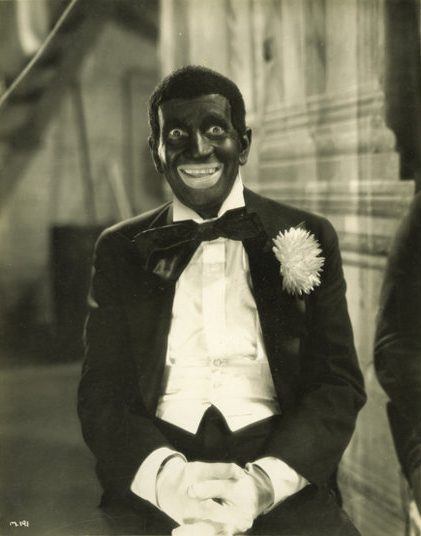

The sins of previous generations


The reason there is no equivalent taboo that prevents middle-class actors from tackling working-class roles is simply because it cannot be seen by the audience.  Unless the performer is a celeb with well known working class roots, the audience simply have no way of knowing whether a competent actor started from palace or poverty.


No taboo means no market pressure.  No market pressure means no institutional change.  No institutional change means we're stuck with the quid pro quo.


You can't have more working class actors in panto without more investment in childcare, primary and secondary education, after school clubs and access courses.  Which I'm all for, but until the Chancellor gets out his cheque book, we may have to temper our expectations.


Saturday, February 24, 2024

Should Panto Dames Buy their own Costumes?

"There is nothing like a Dame." (centre)
by Rogers (left) and Hammerstein (right)

.
Who plays the Dame?  
.
How do they play it?  
.
What function does the Dame fulfil?  
.
What is the relationship of the Dame with the audience?
.


There are so many questions...


Of all the topics I’m thinking about as part of my research, Dame-ing* is the one that performers are most keen to speak to me about.


People love the Dame.  People love watching the Dame.  People love playing the Dame.  It’s surely no coincidence that of the many performer-impressarios running panto companies, the most common role that the producer plays is Dame.


For a start: it’s tricky.  Playing a stock character that carries so much cultural weight and is imbued with so many lifetimes of heritage is a serious undertaking.  With so much at stake (especially when you’re stumping up the capital) there is a certain conservative value in the old adage: “if you want something doing right, do it yourself.”


However, for some Dame-producers, there’s something more at play.  The Dame is a character that inspires people to perform.  People want to play Dame.  Some professional performers got into acting in order to play Dame.  Some professional performers only play Dame.  If you are dead-set on performing Dame, it makes good sense to set up your own pantomime!  Then, not only do you get to guarantee yourself the part you want, you get to make all the fun decisions about costume tracks, wig designs, song choices… it’s Dame heaven.


N.B. Even in the myriad non-professional companies, Dame is a role that carries a certain prestige and is often performed by the writer, the director, or some other community member with similar cachet.  In other companies, Dame is seen as a prize to be shared around… a reward for the performatively-minded for contributing to the community.


My biggest brother James playing Dame
in the greatly auspicious 2023 production of
"Harry Barber and the Four Tea Thieves"
by the Gentlemen of Moore Rugby Club.


However... when it comes to professional panto...


Dames are expensive  


For example. our 2023 production of Aladdin at the Met in Bury had 7 actors with a track of 25 costumes (not including the juvenile chorus). Eight of these were Dame costumes.


Let’s digest that for a moment.  A full third of the costumes used in the show are for one character.  (The ratio is even more skewed if you disregard the walk-down set…)


But numbers only tell half the story.


Compared to the “average” costume, Dame’s costumes are often much bigger, more elaborate and consequently more expensive.  


Sometimes the costume is bigger than the performer!


Now, I have some level of insider information on prices that I don’t intend to divulge on this blog.  It’s not that the industry has anything to hide, but it’s commercially sensitive information and some makers depend on this custom.  (Besides, people who need to know how expensive these things can get, already know…believe me!). However, I don’t think I’m going to blow anybody’s mind too much by saying that kitting someone out in 8 large, spectacular costumes with matching wigs, footwear and other accoutrements can leave a dent in even the girthiest wallet.


A canny investor may seek to make savings by specialising in playing one specific character.  It can be a good idea – if you get a reputation as a good Twankey, Ugly or Mother Goose (John Inman), you can circulate to a different show each year and command a good fee.  Best of all, as you’ll be performing in front of new audiences, you’ll only need to buy 9 costumes and you can wear them every year! 


And buying the kit is only the start of the bills.  Once you’ve got a collection of gigantic frocks and precious hard set wigs, you need somewhere to store them.  Of course, if you have a 20 bedroom mansion with several spare dressing rooms, then this needn’t cause too much of a problem, but given that you’re an actor and not a tech-mogul, you probably don’t… in which case, you better get used to seeing the name “BIG YELLOW STORAGE” on your direct debits every month.


Storage can be a real headache!


As a producer, you can ameliorate some of these costs by staging your show in a different venue next season – after all, you already have the costumes, so now you can budget the cost across two shows rather than one.  If you have a big company with lots of contracts, you might start budgeting a dozen shows or more, across the life of the costume.


If you haven’t got a lot of contracts, you could always try staging more pantos in the venues you have.  This is one of the reasons behind the upsurge in Easter, Summer and even Halloween pantos of late.


Of course, once you’ve had your hilarious big dame costume on in all the shows you can stage, your audiences have seen it – so it’s value to you plummets.   Now you have two options: you can sell it on, or find some space in your workshop and try to hire it out (HINT – why not join one of the dozens of people who have signed up to pursuedbybear.co.uk.  You can have your own shop without the cost of developing a website!).  Of all the panto costumes, dame costumes come up the most frequently on Ebay as people try to recoup some of their investment.  Here is a second hand costume starting at £300.


However, as a performer, your options are more limited.  You have to store the costumes until the next time you get cast in that show. (Although you could always sign up to Pursued By Bear and hire it to someone else)


Which is how we get to the world we now live in, in which a significant number of dedicated performers who play dame have large collections of costumes and wigs locked up in storage, waiting for Christmas.  A stranded asset.  And what do you do with assets?  Capitalise on them.


The Eureka Moment!


At some point in distant history, an enterprising performer, in order to get one up on the competition,  sidled up to a producer at the end of their auditions, and said “Of course, I can provide my own costumes!”


And that producer thought ‘Kerching!’


All those costs, all that upkeep, all those ongoing expenses – it was now on somebody elses shoulders.


All things being equal, why wouldn’t you employ someone who brings their own costumes?


Well, a good idea is a good idea.  Which is why it was at this very moment, that something which nobody foresaw (nor no-doubt wanted) began.  The great dame-costume-arms-race.


If you are losing out on roles to people who provide their own costumes, you might start thinking “I’d better keep up.”  Soon there are so many performers providing their own costumes that some producers only cast performers who costume themselves, foregoing the financial and logistical burden altogether.


Dames who stick with the same company now need to costume themselves for different panto titles.  It’s not good enough to have a few good workers, you need something Chinese for Aladdin, something bucolic for Jack, something French for Beauty and the Beast – or maybe even two of everything if you’re sometimes an Ugly Sister.


Every Dick needs a Sarah!


You can do your best to economise.  The more generic the costume is in style and material, the more titles you can wear it for.  But the pressure to have “showstoppers” is enormous, and even basic workers aren’t cheap.  Several self-costuming dames I have spoken to have bemoaned the very high costs they bear – often above and beyond what they can recoup through “rental” clauses in their contracts (in which a producer offers to pay a flat fee in addition to the performance fee).


Some performers love dame-ing so much they delight in buying new frocks and commissioning wigs… in which case it’s less of a problem.  But some performers, in order to keep up, have got themselves into a quag from which it is not always easy to escape.


And it’s not just performers that suffer.


When you’re writing a script, you craft a world into which you place your characters.  Imagine you have a hilarious idea for a plot line in which Mother Goose is going to a Casino dressed as a roulette table.  You can picture the headlines now “Inspired roulette-table-dress steals the show at the Huddersfield working men’s club” The Guardian, “***** Dame takes hilarious costume out for a spin” Panto magazine, “All bets are off with this years jaw-dropping dame costumes at Felixstowe Independent Methodist Hall” British Theatre Guide.  Now all you have to do is find a dame with a roulette dress.


Good luck!


When the costumes come with performer, you have to pick from their collection - if their collection doesn't have a roulette dress... you get what you get.  So what happens?  Forget your ideas.  Write something generic so what the costume doesn’t matter and bodge together some references to it during rehearsals.  Good performers can make anything work… they’ll probably make something funny! (If it’s their costume, they may already arrive with some lines).  But no matter how well it turns out on the night, you have sacrificed authorial control.


SO, in answer to the question “should dames buy their own costumes?”  It depends.  If you love buying dresses and wigs and curating a costume collection – OF COURSE!  Life is short, make yourself happy.  But you shouldn’t have to.


The question itself is a bum steer. The real focus should be on the producer… 


“Should you be producing shows if they rely on performers to costume themselves.”  To this question, my answer is decidedly, emphatically “no.”


Saturday, October 21, 2023

Joe Pasquale and the funniest bit of panto I have ever seen

Comedy legend, Joe Pasquale.  Costume is model's own

JOE PASQUALE IS MAX LOLS

Hands down, one of the funniest bits of panto I've seen was in 2021: Joe Pasquale playing Wishee Washee at the Theatre Royal, Plymouth.  The man is hilarious.  As actors are fond of saying, he's got "funny bones" (a phrase which always reminds me of Mr Soft from the softmints commercial) or perhaps that he has "comedy chops" (which sounds like something a butcher would get struck off for.)

As well as doing all the 'classic' Joe Pasquale lazzi (ride on toilet, anyone?) he delivered the best rendition of "If I weren't in pantomime" I have ever seen.  This is no mean feat, as it's a bit of old shtick that I usually hate, because:

  • It bears no relevance to the plot
  • It's usually shoehorned in at the end so the actors are knackered by the time we get to it
  • When you see 20 pantos a year, the tune starts to haunt you in your nightmares
  • It's looooooooong - not only for the audience, but for the actors, so by the time all our shows are up and I go round seeing everyone else's, the actors are typically just running through the motions
  • You need the comic timing of Joe Pasquale to pull it off, and very few people do!

Fortunately for everyone in the audience, Joe Pasquale does indeed have the comic timing of Joe Pasquale. And a lot of tattoos - which is a piece of knowledge that I only acquired after witnessing him dance in a tutu.

Fun fact: Joe Pasquale was a great friend of my husband's uncle, another ferociously funny man: Terry Seabrooke.  I have Terry's patter book upstairs in my office.  We inherited it after his passing in 2011.  Aunty Hilda had put it to one side for us amongst a slew of photos of Uncle Terry cavorting with celebs. 

Uncle Terry (left) and former UK Prime minister John Major (Right) 
 

I have met Joe Pasquale - and can 100% attest that he is a lovely, lovely chap.  Funny, warm and generous.  If you get a chance to meet him - do it!  You will not be disappointed.

Comedy Controversy

My admiration for Joe Pasquale and his work is so great, that it is endlessly annoying for me that one of my favourite comedians does a 'bit' making fun of him. On Paramount Comedy Edinburgh and Beyond (2006) the very dry, and decidedly not-pantoesque Stewart Lee did a great bit recounting an incident during the 1995 Royal Variety Show in which Joe Pasquale told a joke that was originated by Irish comedian, Michael Redmond.  It's really tightly written and expertly delivered (if you haven't seen it already, you can watch it here.) 


Stewart Lee, Mr Eyebrows (West Midlands region 2011-2013 & runner-up 2018) 

The premise of the routine revolves around a juxtaposition of philosophical positions regarding the ownership of jokes and comedy.  

Nowadays we are used to stand-ups reflecting on their lives and experiences to make us all laugh - but this was not always the case. It is a sharp observation that up until the alternative comedy revolution of the 1980s, the prevailing paradigm framed comedy as an inherited folk art.*

*I can't quite remember who I first heard making this observation... possibly Charlie Brooker, possibly Stewart Lee, possibly some other clever bloke who doesn't smile when they're telling a joke... 

In this comedic paradigm which we inherited from our forebears, comics 'tell jokes' or 'do routines' which they draw from a communal pool of material.   The same joke might very well be told on the same night in working men's clubs up and down the country - by Jim Davidson, Tommy Cooper, or Jimmy Cricket... each performer adding their own spin, but the punchline remaining the same.  This state of affairs goes back in time further than you can imagine.

The 'misidentified twin routine' in Shakespeare's The Comedy of Errors is really just a rehash of Manaechmi by Plautus (who I dare say got the idea of a Phoenician bloke he met downn the pub, who in turn read it in Sargon of Akkad's 1001 Mesopotamian Jokes for Kids)

This is important to understand when it comes to panto, because the genre draws its roots from a time when the folk-art paradigm was prevalent.  

Skits and Bits

The "comedy bits" so synonymous with the genre, (ie the ghost gag, the baking scene, the schoolroom scene, the haunted bedroom) may be performed in the style of the company, but the punchlines are the same.  

It is impossible to watch the hilarious Morgan Brind of Little Wolf decorate the bedroom in his Sleeping Beauty slop scene without being reminded of his references to Chaplain's 1915 masterpiece Charlie the Decorator


Morgan Brind, Sleeping Beauty (Loughborough Town Hall, 2016)

Structurally, these scenes ape the semi-improvised lazzi that typified Commedia dell'Arte.  These scenes don't belong to any performer, nor to any panto.  As a case in point, here is a clip of Cannon and Ball performing the lovers on the wall skit with Iris Williams in 1982.


The rarely performed spear-up-the-bum variant of the ghost gag

For many people, panto wouldn't be panto without these 'bits.'  They are the scenes they remember from childhood.  These are the laughs that parents seek to pass onto their children, just as their grandparents passed them onto them.

However, producers/writers are well advised to consider these scenes carefully.  Cut and paste them into the script and the scenes feel disconnected from the rest of the play. Include too many and there won't remain enough time to develop the plot.  

While the inclusion of these genre defining lazzi may be a necessary convention of the genre, producers must avoid the temptation of extending this folk-art paradigm too far.    Lazy writers recycle dialogue, or even whole scenes from show to show (watch out for tell-tale sign of scenes scripted as comic: / dame: rather than Trot: / Jack:).  Lacking appropriate support from the script, some performers fall into ruts of performing the same jokes year on year.  I heard one Dame explain that he didn't need to change his speech as he'd been doing the mushroom joke at the same venue for 10 years, and the audience loved it - which was certainly true... but the audience was small, having self-selected itself by pruning out those who had tired of hearing the same old shtick too many times.  The venue changed production company the following year.

Star Turns and Familiar Faces

As did the Commedia performers of 16th century Italy, some performers come pre-prepared with tried and tested 'bits' that are audience hits.  A prime example is the ever popular Andy Ford who is presumably hired with the expectation that he does his 'literal nursery rhyme' bit amongst others.  This model makes most sense for large production companies that can rotate celebs between different towns, preventing any one local audience seeing the same bits twice.   Andy is a great clown, and I was delighted to see him perform the bits in person at Peter Pan in Dartford (QDos, 2019).  My enjoyment was hampered a little by the fact that I'd seen him do the bits in other pantos - all via the magic of YouTube (in fact, there are some great clips of logical nursery rhymes on his YT channel here.)

Panto legend Andy Ford in action


Now admittedly not everyone is as big an Andy-Ford-aholic as I am.  Certainly the audience in Dartford lapped it up in the same way that I did when I first saw it.  

Truth be told, I have never been a particular fan of the lego-brick "insert star turn bit here" dramaturgy that is popular with some of the bigger pantos.  It's certainly a model, and the big producers that employ it are playing bigger houses than me, so they must know something I don't.  For a start, they know how many tickets they have to sell... which is a hell of a lot... in which case a name is a must have.  In fact, when you go in for big tenders, one of the frequently asked questions is precisely: which celebs do you have a good relationship with?  (Which is why you see producers making a beeline for the TV crowd in the bar).*

*However, IMHO there's no reason why you can't your cake and eat it.  I have seen celebs turn out beautifully crafted panto performances that both conform to the genre and commensurately communicate pathos, comedy and character (Sue Delaney in Cinderella at the Oldham Coliseum, 2018 anyone?!)

But not every performer is a star-turn, with a fresh audience in a new town each year.  Part of the appeal for many audiences is seeing familiar faces from year to year.  Particularly when it comes to the comic trio, the actors often become as much a part of the tradition as the venue.   

How many people go to the Hackney Empire each year in order to see Clive Rowe?  A fair few, I bet.  He is their dame, they are his audience.  It is this relationship between performer and audience that the producers of Dick Turpin Rides Again at Grand Opera House, York hoped to exploit when they teamed up with Berwick Kalor who had built a pre-existing fan base at the Theatre Royal down the road.  (OMG... Berwick Kalor.. do you remember that speech?!)

Cockney, noun - defn. a person born within the 2 tube stops of Clive Rowe playing the Dame

For these familiar faces, novelty of performance requires the support of novelty in the script.  The very best pantos I see are full of fresh, innovative comedy, written for characters as opposed to archetypes.  How can we expect performers ad directors to find any truth in performance if there is none on the page?

An example - 

Watching Peter Pan at the Litchfield Garrick, 2021 it seemed to me like every scene started with a non-plot related cut-and-paste gag of the form: 

Dame: "Sorry I'm late, I've got caught behind a ship that was carrying brown paint that crashed into a ship carrying red paint."  

Comic: " You got caught behind a ship that was carrying brown paint that crashed into a ship carrying red paint?" 

Dame: "Yes.  All the survivors were marooned."

I mean.  It's not awful.  But it's filler.  The thing is once you've had the shtick for the fourth scene in a row it starts to grind.  It's the feeling you get when you notice that all the jokes in Blackadder are similes...  and "the stickiest situation since sticky the stick insect got stuck on a sticky bun' starts to sound exactly the same as "as cunning as a fox who has recently been made professor of cunning at Oxford University."

Admittedly I am a writer, so maybe I'm a harsher critic than most.  But you don't need to train at RADA and the Royal Court to yearn for something a bit more that you'd find in a cracker.   Especially at £30 a ticket!  I remember the feeling of dissapointment...  after all, the script has come from the pen of the same writer as Mother Goose at Theatre Severn, Shrewsbury (2019) which remains, to this day, one of the best pantomimes I have seen.

The cookie-cutter approach becomes ever more evident the more pantos you see.  While it is a little disappointing to watch pantos by the same writer only to hear the same jokes, it is eye-opening to hear the same gags trotted out by companies at opposite ends of the country.  

TOP TIP: If your joke contains the phrase "wrinkly things on sticks" or has the punchline "Now why dance?" it's time to write a new one.

Scripts which unthinkingly regurgitate the inherited joke book of yesteryear are the hallmark of lazy writing.  Not only do lazy writers risk boring their audience, more importantly they risk alienating them by perpetuating the outmoded societal norms upon which these jokes were based.  

Our Inheritance - the Folk Art Paradigm

A great friend of mine recently bequeathed to me a fascinating book entitled Make 'em Laugh: A Comedians Handbook by Michael Kilgarriff.  Published in 1973 it is a compendium of gags, comebacks and comedy skits that typify the folk-art paradigm of comedy that panto has inherited.

The Bible of 1970s Comedy Antics


The jokes are hit and miss... mostly miss.  Perhaps 5% hits.  Some of the jokes, it's hard to imagine were ever very funny, but you don't have to be as old as the ancient mariner to remember a time when many of the sexist and xenophobic gags it contains were the bread and butter of popular comics.  

There are some real doozies, and you don't have to work hard to connect the dots between the gags of the seventies and some things you see in panto today:

"There's not much money in this gig.  Money!  If this was China I'd be picketed by coolies!" p33.  

 Hello otherisation-of-people-of-Chinese-descent - I recognise you from a few recent productions of Aladdin.  Those of you who have been following the blog will know that I am a big advocate of retaining the Chinese setting for Aladdin, but there are ways of doing it that don't make the audience feel yellow.  For those of you buying the book, p140-147 gives a particularly detailed description of The Pig-tail of Li Fang Fu by Sax Rohmer including script and directorial annotations!  Admittedly I've never seen it in a panto, but I can attest that at least until very recently The Chinese language test lived on (cough... Darwen Library Theatre).

"She reminded me of my wife's mother - short and fat with a big moustache" p 78.  

I recently spoke to a woman who said she doesn't like panto because it's men making jokes about women being fat.  Unfortunately it often is... which is odd for a commercial art form in a country where nearly two thirds of the population are overweight.  

"I wouldn't say she'd been a bad girl but they buried her in a Y-shaped coffin" p82, 

and not forgetting...

"What about the women round here, though!  I left here last night and this girl came up to me and said, 'Want a good time?' Said, 'Sorry, love, I've only got fifty pence on me,' She said 'That's all right, I've got change...' p105.  

How many Aladdin scripts have I read that describe Widow Twankey as the biggest scrubber in Peking?  Too many.  NEWSFLASH: the sexual liberation of women started in the 60s... if you still think that women having sex is gag-fodder, you are 60 years out of date.  

"You could tell he was Irish by the shamrock in his turban" p88.  

This joke has aged particularly poorly, not only because trans-continental immigration has ended the racial homogeneity of Ireland, but because the prime minister of Ireland himself is half-Indian.

"She's as ugly as a bag of chisels.  At Christmas we hang her up and kiss the mistletoe." p104. 

Many (possibly most?) pantos I see, at some point, seek to get comedy milage out of describing the Dame as ugly.   I've heard the justification that as a man in a dress makes for an ugly woman it's too obvious a lampoon to be offensive.  But you can't blame women who may feel uncomfortable with a man pretending to be a woman, judging femininity in terms of ugliness/beauty.  Schools spend all year teaching kids to judge people by the content of their character, not by their looks and then they take them to a show where a female character is made the butt of a joke because she isn't very pretty.  In my mouth at least, it leaves a sour taste.   With the recent uptick in drag performers crossing over to panto, we must all be particularly aware of avoiding such pitfalls - acerbic witticisms that play well in a gay bar can be unnecessarily cutting when delivered in a family show.

It's not all doom and gloom.  There are Drag queens that get panto really really right - if you want some examples, look no further than Miss Jason or LaVoix... coincidentally, both characters played by absolutely lovely chaps with warm hearts and humour that welcomes-in rather than puts-down.


Miss Jason (top) and La Voix (bottom).  Proof that Drag Queens can also be BRILLIANT DAMES


TLDR;

The folk-art paradigm of comedy on which much pantomime is based is defunct.  

Our audiences deserve better than the same old shtick.  In large part, the proliferation of recorded media has sounded the death knell of cookie cutter gag-based comedy.   

As modern audiences have become more sophisticated consumers of comedy, expectations have evolved away from gags towards character comedy.  Furthermore, the inherited joke book, on which previous iterations of panto drew so heavily, is a vestige of an earlier era that doesn't translate particularly successfully to our rapidly diversifying and liberalised society.  Lazy writing which continues to rely too heavily on this joke book risks perpetuating the outdated societal views prevalent at the time the joke book was established.  Better writing is character led, inclusive and drives the plot.

As far as comedy goes: stand-up moved on in the 1980s; panto is behind the times. Our whole genre needs a paradigm shift. 

My Twopenceworth


Sunday, July 23, 2023

ALADDIN IS CANCELLED!

Stop all the clocks, cut off the telephone, prevent the dog from barking with a juicy bone...

It is official:


 ALADDIN HAS BEEN CANCELLED 


Forget everything you thought you knew about the 2023 Northwich Memorial Hall Christmas Pantomime, it's going to be Beauty and the Beast starring Les Dennis.

"I thought you said last week it was going to be Aladdin starring Les Dennis?" I hear you cry!

(If you didn't cry it, you just missed your cue -  this is a panto blog, keep up!)

I did say they were doing Aladdin... and they were... until they weren't.  Now they're not.

Twitter has spoken and Producer X has decided to change the production.

Well thank goodness for that! I've been losing so much sleep with worry.  I shall rest easy tonight!

In hindsight it all seems so obvious.  OF COURSE: all we had to do was CANCEL ALADDIN and now the world is a better place.

Say what you like about the people of Twitter, but when push comes to shove, they really are quite a lot better than ordinary people like us.


AND SO ENDS THE GREAT NORTHWICH PANTO DEBATE OF 2023


It's not every day you get to witness a full blown Panto Twitterpocalypse unfolding before your eyes.   We gasped, we cried, we said "ooh, it's Les Dennis".  It was great while it lasted, but all good things come to an end (except for the Möbius strip).

The panto title has been changed, the artwork redrawn and the infamous all-white cast-reveal tweet has been completely and totally deleted, and any/all traces of it have been scrubbed from the Earth, so that no man will evermore see it again.


Screengrab of the original tweet.


If this whole debacle has taught us all anything at all, it's that:


"It is racist to perform a play set in a China,"


Or was it that:


"It's racist to cast a play exclusively with white actors,"


HANG ON, I'VE GOT IT! 

The lesson we learned was:


"It's immoral to perform a story that was written by someone from another country,""


Or was it:

"if you can't cast a real Chinese Princess you can hire a white Princess Jasmine, just as long as the actor playing Les Dennis is black."


Whatever the lesson we were supposed to have learned is, I'm sure that it went something like this:


This production is X

The people involved are Y and not X

THEREFORE the production MUST BE CANCELLED


And surely we can all agree on that? 


 Or can we?


Aladdin, The Big Tiny 2022.  
Michael Pellman (Aladdin) and Will Cousins (Chinese Lion)*
*WARNING: Cultural appropriation... Will is a human and not a real lion!.


Quick bit of context...

For those that don't know, I'm currently researching a PhD in 'how contemporary British pantomime is responding to evolving ideas of identity.'

At the end of my research, I'll publish my thesis with recommendations for best practice across the industry, including what we are going to do with Aladdin.  Possible options are:


1.    We should cancel Aladdin.

2.    We should change Aladdin.

3.    We should defend Aladdin.


There are some interesting and nuanced arguments made for reimagining and/or scrapping Aladdin, which I'll be addressing in my next few posts.

But if I may, I'd like to leave the specifics aside for a week, and instead lay some groundwork by posing a question that gets to the nub of the matter:


"Why is everyone so bloody interested in identity all of a sudden?"


Identity is a dangerous game


IDENTITY POLITICS

At its core, identity is a privilege that we claim in order to get something we want.  It might be something important like fair treatment in job interviews; it may be something mundane like a parking space.

It works by drawing an imaginary line between two groups of people, an in-group made up of good-looking, clever and noble people like you, and an out-group for everyone else.
we need a sense of difference or otherness in order to develop a sense of self or identity.”
Caroline Howarth, Eleni Andreoui "Nobody Wants to Be an Outsider”; 
From Diversity Management to Diversity Engagement p330 

My Actual Passport Photo


UNDER THE BONNET:  How does it work?


1. You want thing X (e.g a deadline extension, audition slot, sympathy, social change, etc.)

2. Make a claim to identity (race, religion, disability, gender, sexuality, political tribe, nationality...

3. Identify some characteristic or quality and differentiate between two groups
(Graduate vs school leaver, working class vs missile class, white vs global majority, professional vs am-dram...)

4, Argue that the group you're in deserves special consideration (e.g. weight my opinion, give me resources, invite me onto the management team...)

5. If all goes well, you end up with X and merrily carry on with your day


We all claim different identities when we think they'll be useful.  I claim my identity as a gay man every time I fill out a diversity form for a grant application. 

It can be a brilliant strategy for drawing attention to your situation, providing another point of view, and for redressing balance when things get out of kilter.

"You can't understand racism in the workplace because you're white.  I've been turned down for job after job, even when I've clearly been the best candidate by miles - at my last interview the manager asked me "where I came from... originally".  Big companies should have all-black candidate lists to make sure their workforce is representative."


🌸

IS IT JUST ME, OR HAS ANYONE ELSE NOTICED...


1.   In the past, people didn't think much about identity.
2.   Recently it seems like everyone's talking about their identity (particularly young people)
3.   People seem to be placing a lot of importance on certain core characteristics: sexuality, race, gender
4.   Recently there seem to be lots of new categories to sort yourself into: trans/cis, non-binary, neurodiverse etc.
5.   Other people's identity seem to be placing increasing demands on your own practice, e.g. pronouns, casting quotas etc.


Something's definitely different.  So what's changed?

Pretty much everything.


It's certainly true that until very recently (sociologically speaking), people didn't spend an awful lot of time thinking about who or what they were.  Not that it didn't matter.  Who or what you were mattered a lot: if you were a serf you had to toil on the land; if you were a king you could start a religion and chop your wife's head off.  

The thing is, up till quite recently, no matter who or what you happened to be, you didn't really have much say in the matter - you were who you were and that was that.  Complex webs of duties, oaths and obligations tied individuals to one another, and into much larger social structures.  Identity was not something that had to be thought aboutIt simply was. 


In academic terms: in traditional societies, identity of the individual is an emergent property of social structure, characterised by predefined inter-personal relationships and mediated through reciprocal social interaction. TRY SAYING THAT AFTER THREE DOUBLE GIN AND TONICS!


For all their faults, many of the core qualities of traditional societies were strong and socially cohesive. Contrast this to the socially destabilizing qualities at the core of Modern Western Society. 


Table 1: Core qualities of traditional and modern Western societies 


Traditional Societies 

Modern Western Society 


Culture 

Monolithic 

Multicultural 

Ethnicity 

Homogenous 

Multiracial 

Family structure 

Extended, Village-wide 

Nuclear 

Power structures 

Hierarchical 

Democratic 

Faith 

Unitary 

Multi-faith and Atheistic 

Philosophy 

Religious 

Materialistic 

Social 

Conformist 

Individualistic 

Morality 

Rigid 

Permissive 

Politics 

Conservative 

Liberal 

Economies 

Integrated 

Capitalist 

Gender Roles 

Patriarchal 

Emancipated 

Social Permeability 

Aristocratic 

Meritocratic 

Identity 

Socially Negotiated 

Self Determined 


Overall Effect 

Socially Cohesive 

Socially Destabilising 


This is problematic. 


The history of  pre-modern human civilisation is one of gradually increasing population size over thousands of years precipitating the incremental evolution of social structures into increasingly complex and organised societies. 


Now, in the comparative flash of a few decades, these social structures have gone, and society has been destabilised by an unprecedented and prodigious realignment of our core values. 


While this transition has gained us much in the way of personal freedoms and prosperity, there are some benefits that it forfeited.  One of these is the loss of emergent identity. 


For the first time in the history of human civilisation, people have been thrown onto their own devices to ask themselves some unsettling questions:


The unsettling answer:
You're nobody and you don't.

NOW HOW DO YOU FEEL?

Uneasy
Insignificant
Disconnected
EXISTENTIALLY ANXIOUS

How can you emotionally anchor yourself in a society where nothing is fixed?

Through the act of identification. 

"I am X.  X matters."


"I am trans, I am gay, I am black, I am a Muslim... "
"No.  You're a giraffe"
"So who's that rabbit you're thinking about?"
"How can you see through that box?"
"What box?!  Aaaagh!  Help, I'm trapped in a box!"


🈠


Everyone happy enough with the theory?

Good - It's important for what's coming next!

🈠


If you had a suspicion that things have changed -  You're right!

People are making more claims to identity, but that's because they're using identity to achieve something different.

The game we are all playing has changed and it happened while you weren't paying attention.


HOW PEOPLE ARE ACTUALLY USING IDENTITY


1. You feel disconnected from society and experience existential angst

2. You make a claim to identity

3. Using some characteristic, you differentiate the in-group that you're in from "the out-group"

4. HOORAY!  Now you have a group!  A group full of people you like and are like, and not like the people from the out-group, (who nobody in the the in-group likes).

5. Finally, you feel like you fit in.  


6. Anxiety fades, you can go merrily on your own way.


Only you can't.


Unlike the previous example in which people claimed an identity in order to achieve something specific of value, now they might claim identity without any specific demands - the value is derived from the act of claiming identity itself.

You cannot go your own way.  Your in-group identity only makes sense in opposition to the out-group.

There can be no end.  Just perpetual introspection and struggle against 'an antithetical other.'  There is no end-game, no ultimate plan, no point at which you can say: "I've got what I wanted - I'm going to go and enjoy it!"

OK, you sent an angry retweet about a panto in Cheshire you'd never have gone to.  Everyone saw how not like those other people you are - how you'd never tweet headshots of only white actors, when Aladdin is a story from the SYRIA!  There are two types of people in this world: people who understand everything and are right, and people who think it's OK to set a pantomime in a foreign country - which is actually, as everyone you know has already decided is incredibly, incredibly RACIST.  And thanks to your tweet everybody can see how not-racist you are - which is why you've never produced a panto of Aladdin in Northwich, or anywhere else in mid-Cheshire for that matter, CERTAINLY NOT with with white actors and DEFINITELY NOT with  a Chinese font on the poster.  That is a !  Which now everyone knows - because YOU retweeted the poster - you commented : 'Another racist panto again!" and then THREE eye-roll emojis.  And thanks to your tweet, they've changed the production to Beauty and the Beast - which is one of the not-racist pantomimes because the foreign country it's set in is closer and has mainly white people living in it!  

Well done.  They'e pulled it.  Now what are you doing?  You're already scrolling through Twitter for something else you can rail against.


WHY DOES IT MATTER?

Despite what you may have read in the statements of the UKPA, there are competing opinions amongst panto producers about how we ought best go about adapting our practice to accommodate everyone.  

Let's get down to brass tacks.  We're stuck on a rock hurtling through space at 66000 mph.  As far as we know, we get one go round and that's our lot.  I don't know a great deal, but I'm certain of this: we need more joy, less hate and we all ought to leave this planet in a better state than we found it.   

I want to support everyone, everywhere who identifies as anything at all: if it brings you joy then I'm 100% on board!  I remember when my cousin transitioned (M2F).  She was ABSOLUTELY bloody delighted every time she came out after surgery.  It took a few goes on the surgeon's bench, but she finally became the beautiful woman she always wanted to be, and every day since has been a total delight.  

GOOD LUCK TO YOU: If you're half as delighted to identify as religious, body positive, neurodiverse as I am to identify as gay, then the world and all that sail in her shall, in one voice, rejoice!  

However, if instead, it is the case that the recent tendency towards identification is a symptom, not of people attempting to improve their lot, but of ameliorating the existential anxiety that comes from societal dislocation, it is not clear what accommodations we could really make (if any) that would ever be sufficient to help.  

We all got into panto producing because we want to bring joy to the world.  It's panto - it's supposed to be joyous and fun - and everyone's invited to play along!  But for whatever reason, some people come and don't play.  They pitch up on the other side of a battleground - and suddenly we've stopped playing "let's make a better panto for everyone to enjoy," and started a never-ending game of "What identity do I need to claim to find what you are doing offensive?"  

They didn't come here to watch the panto.  They didn't come to observe, or discuss or, god-forbid, be entertained. 

What if we did?  We could CANCEL ALADDIN.  Could we at least move on?

I think not.

 They came here to shout:"CANCEL ALADDIN," not because they want to see Beauty and the Beast, but to be seen shouting.

The truth is, there is no end to the demands that could be made:

BAN Aladdin because it's cultural appropriation
BAN Snow White because it exploits little people
CANCEL the dame because it lampoons gender non-conformity
ESTABLISH quotas to ensure 50% of every cast is from the global majority
INSIST that 50% of the cast are obese, to better represent the audience
DEMAND all productions of Dick Whittington employ a Moroccan actor to perform the role of the Sultan
STOP throwing out sweets because they rot kids teeth
BAN the dame slapping the comic over the head because it encourages domestic violence
WRITE asexual love stories to promote diversity (this has already been suggested)
SILLY Billy must not be silly, because it otherises children with SEND
BAN innuendoes as they provide a barrier to enjoyment to religious families
PHASE OUT the fairy godmother, because it encourages children to engage in magical thinking
RETIRE the ghost gag and replace it with something less scary - a rabbit gag!
AND so on...
AND also...
AND another thing...


The day you wield identity as a weapon, is the day that you cross the Rubicon.


Acquiescence is not a viable option.


I love panto.  I love it so much I make it professionally and spend 3 years researching it for my PhD.

            If I'm going to have to fight for it, then I will.

              If people make demands instead of making their case, 

                    my recommendation for best practice is likely to be...

"We need to meet this head on.   
Once more unto the breach dear friends.
Fight the good fight, comrades.
Don't give 'em an inch."


Can you call someone the N word if you have Tourettes?

Hello my lovelies! Just when you thought it was safe to get back in the water, I’m back with another panto blog. My apologies for keeping yo...