Monday, April 29, 2024

3 Things I've learned from Interviewing Panto Bigwigs

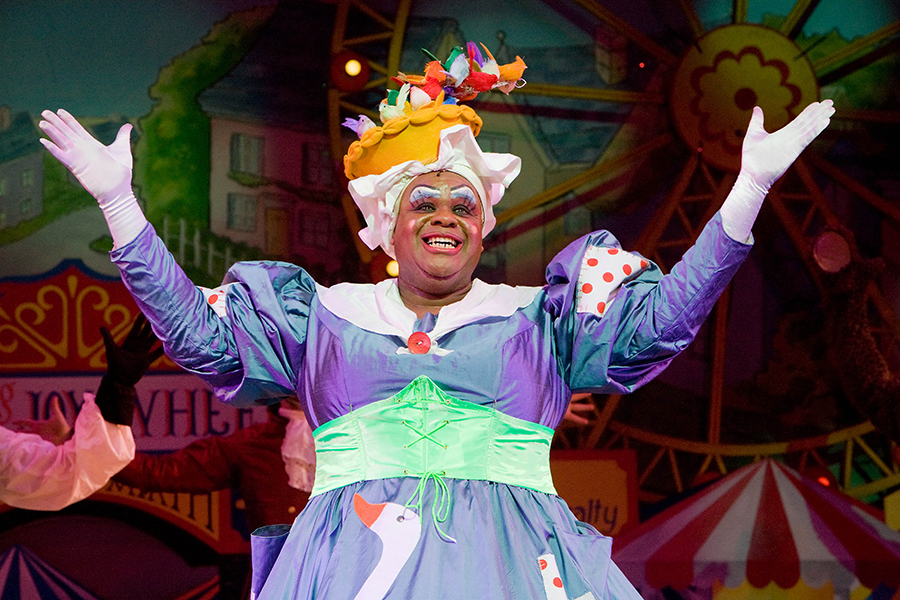
Clive Rowe stars in Mother Goose at Hackney Empire (Photo: Robert Workman)
Read the article here

What a hectic few months! 

While everyone else has been sunning themselves in the April sun down at Skegness lido, I have been studiously interviewing dozens of panto professionals about their practice. I have interviewed writers, dramaturgs, directors, performers, CEOs, musical directors – all types of people, with the aim of understanding exactly what they are doing and why. 

Honestly, it’s been a blast. I’ve had such wonderful in depth discussions with people who really know their onions. The interviews were 30-60 mins long and were semi-structured around themes of pantomime and identity. 

 Big ticket items were: 
 
1. How are we/should we be responding to evolution in ethnic identities 
2. How are we/should we be responding to evolving ideas of sex/sexuality/gender 
3. How are we/should we be responding to disabled and neurodiverse identities 

I’ve still got a bucketload of comparative data analysis to do before I come to any conclusions. However, here are three general points worth noting… 

RANGE OF RESPONSES 


Range of responses... geddit?!  Because it's a range....
Oh, suit yourself!

On most specific questions, the range of opinions is broad

How broad? 

That depends on the question, but as a rule of thumb: probably broader than you imagine. Here are a few topics alongside some of the opinions I’ve heard, to give you an idea: 

DAMES:
  • Dames shouldn’t be performed as drag, 
  • Dames should be performed more like drag, 
  • Dames shouldn’t impersonate women, 
  • We must defend the tradition of men playing the Dame, 
  • We should be encouraging more female Dames, 
  • We should be writing more scripts without Dames. 

TITLES:
  • We should drop Aladdin (and Morocco from Dick Whittington), 
  • We must never drop Aladdin, 
  • We should be phasing out Snow White,
  • We should only stage Snow White IF we can cast little people, 
  • We should be reimagining plots so they take place in Britain, 
  • White creatives should restrict themselves to stories from white cultures. 

CASTING:
  • We should hire the most talented people at the audition regardless of intersectionality, 
  • We should earmark specific, or a specific number of, a number roles for actors with identity X and cast the most talented person who fits, 
  • It is impossible to find actors who are identity X, 
  • It is the job of the creative team to achieve diversity in the audition pool, 
  • The cast should reflect the local audience, 
  • The cast should reflect the national demographic.

Not every question prompts such an array of responses. Almost everyone is agreed that it’s time to stop racialised make-up and accents, so if you’re still doing that, you are in the minority. 

Of course, the joy of these interviews is that people give such thoughtful and substantive arguments to support their varied positions. The tricky part is working out how to piece them all together and use them to inform best practice. 

ANONYMITY 
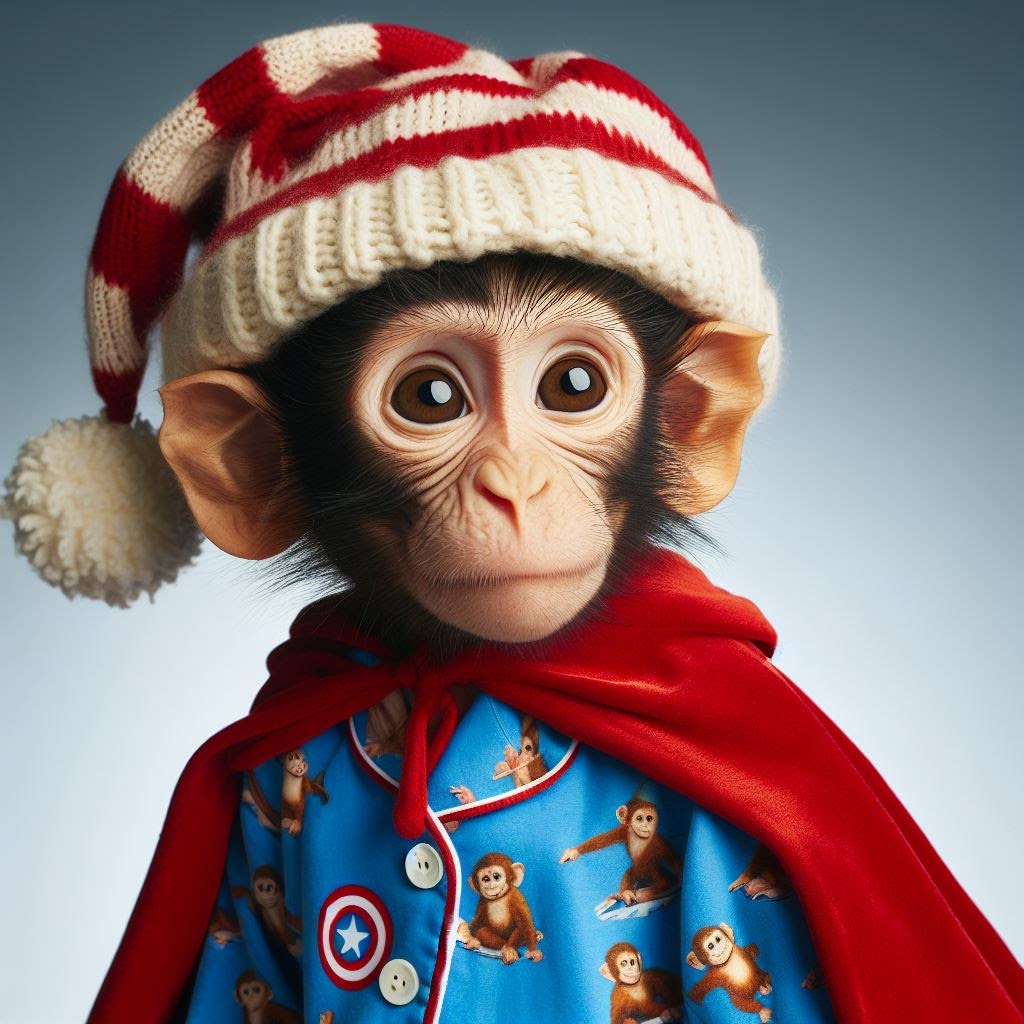
Anonymous Monkey Bernard T. Chimpalot


A number of interviewees stipulated that one or more of their responses were off the record. 

Now I must stress that 100% of the people I have interviewed have been professional theatre makers sharing honest and thoughtful opinions which they have developed in response to their lived experience.   Nobody I have interviewed has been in the least bit ignorant, supercilious or exclusionary. 

And yet, on more than one topic, a number of these well-informed professionals felt that they couldn’t express their opinion honestly and openly for fear of opprobrium or backlash. 

This is not ideal. 

All opinions that are held in good faith should be listened to and responded to with thought and consideration. It is vital that this process of exposition, comprehension and rebuttal be undertaken without prejudice so that all parties are heard and challenged. 

The wonderful thing about opinions is that they can change. You can be persuaded by somebody’s real life testimony, contradicted by new data, deconstructed by an insightful argument… BUT ONLY if you are able to talk about it! 

People who are certain that they are right may present their opinions as fact, eradicating space for debate, and dismissing people they deem in the wrong. As a result they quash counterpoint in pursuit of unanimity of voice, which they mistake for unanimity of thought. This is a mirage. Closing down argument prevents the very process by which opinions may be changed. 

These are not open and shut topics with definite rights and wrongs; not everybody has thought about them in the same depth, or is informed by the same information or experience. Participation in the debate is crucial – we must be prepared to take a step back from our positions so that the whole community can engage and be persuaded. 

CAVEATS 


As you would expect, most opinions I heard were nuanced and came with copious context and caveats. One caveat that came up a number of times related to the size of the production. 

 I have a feeling that if the interviewees had unlimited resources, their responses would have been (at least somewhat) more closely aligned. However, many interviewees acknowledged that even the most laudable aims might be unpragmatic for productions in smaller provincial venues with limited budgets. 

For a small company, the problem with Snow White isn’t that it requires you to cast little people, but that it requires you to cast seven extra people. Even on questions where there was a fair bit of consensus on what we should be aiming at (e.g. ethnically diverse casting of Aladdin) there was genuine understanding that goals that are reasonable for big shows near London may not be attainable elsewhere. 

In many ways this is the biggest elephant in the room. We all know it’s there, there's no easy way round it, and it’s impossible to deal with it without watering-down or compromising our ethical positions.

How to make the best show we can using the resources we have is a conundrum that those of us working in smaller venues regularly grapple with. 

 It is frustrating to be held to a one-size-fits-all standard as though we all have the same capacity to respond as Crossroads e.g. in casting, rehearsal time, redesigning costumes/sets etc. It may be reasonable to expect shows with 20 performers in 2000 seat venues in urban centres, to cast diversely, extend their rehearsal times to accommodate needs of neurodiverse-performers or throw out their set because it has Chinese dragons on. However, these are huge aims for a show with 6 performers in a 160 seat theatre in a National Park. 

We should work towards an industry where this truth is more openly and regularly acknowledged. 

7 fantastic performers who won't be appearing together at a 200 seat venue

--------

 TL;DR

Less people agree with you than you think 
None of the arguments have been won yet 
We need to get real if we are going to set practical targets

Saturday, February 24, 2024

Should Panto Dames Buy their own Costumes?

"There is nothing like a Dame." (centre)
by Rogers (left) and Hammerstein (right)

.
Who plays the Dame?  
.
How do they play it?  
.
What function does the Dame fulfil?  
.
What is the relationship of the Dame with the audience?
.


There are so many questions...


Of all the topics I’m thinking about as part of my research, Dame-ing* is the one that performers are most keen to speak to me about.


People love the Dame.  People love watching the Dame.  People love playing the Dame.  It’s surely no coincidence that of the many performer-impressarios running panto companies, the most common role that the producer plays is Dame.


For a start: it’s tricky.  Playing a stock character that carries so much cultural weight and is imbued with so many lifetimes of heritage is a serious undertaking.  With so much at stake (especially when you’re stumping up the capital) there is a certain conservative value in the old adage: “if you want something doing right, do it yourself.”


However, for some Dame-producers, there’s something more at play.  The Dame is a character that inspires people to perform.  People want to play Dame.  Some professional performers got into acting in order to play Dame.  Some professional performers only play Dame.  If you are dead-set on performing Dame, it makes good sense to set up your own pantomime!  Then, not only do you get to guarantee yourself the part you want, you get to make all the fun decisions about costume tracks, wig designs, song choices… it’s Dame heaven.


N.B. Even in the myriad non-professional companies, Dame is a role that carries a certain prestige and is often performed by the writer, the director, or some other community member with similar cachet.  In other companies, Dame is seen as a prize to be shared around… a reward for the performatively-minded for contributing to the community.


My biggest brother James playing Dame
in the greatly auspicious 2023 production of
"Harry Barber and the Four Tea Thieves"
by the Gentlemen of Moore Rugby Club.


However... when it comes to professional panto...


Dames are expensive  


For example. our 2023 production of Aladdin at the Met in Bury had 7 actors with a track of 25 costumes (not including the juvenile chorus). Eight of these were Dame costumes.


Let’s digest that for a moment.  A full third of the costumes used in the show are for one character.  (The ratio is even more skewed if you disregard the walk-down set…)


But numbers only tell half the story.


Compared to the “average” costume, Dame’s costumes are often much bigger, more elaborate and consequently more expensive.  


Sometimes the costume is bigger than the performer!


Now, I have some level of insider information on prices that I don’t intend to divulge on this blog.  It’s not that the industry has anything to hide, but it’s commercially sensitive information and some makers depend on this custom.  (Besides, people who need to know how expensive these things can get, already know…believe me!). However, I don’t think I’m going to blow anybody’s mind too much by saying that kitting someone out in 8 large, spectacular costumes with matching wigs, footwear and other accoutrements can leave a dent in even the girthiest wallet.


A canny investor may seek to make savings by specialising in playing one specific character.  It can be a good idea – if you get a reputation as a good Twankey, Ugly or Mother Goose (John Inman), you can circulate to a different show each year and command a good fee.  Best of all, as you’ll be performing in front of new audiences, you’ll only need to buy 9 costumes and you can wear them every year! 


And buying the kit is only the start of the bills.  Once you’ve got a collection of gigantic frocks and precious hard set wigs, you need somewhere to store them.  Of course, if you have a 20 bedroom mansion with several spare dressing rooms, then this needn’t cause too much of a problem, but given that you’re an actor and not a tech-mogul, you probably don’t… in which case, you better get used to seeing the name “BIG YELLOW STORAGE” on your direct debits every month.


Storage can be a real headache!


As a producer, you can ameliorate some of these costs by staging your show in a different venue next season – after all, you already have the costumes, so now you can budget the cost across two shows rather than one.  If you have a big company with lots of contracts, you might start budgeting a dozen shows or more, across the life of the costume.


If you haven’t got a lot of contracts, you could always try staging more pantos in the venues you have.  This is one of the reasons behind the upsurge in Easter, Summer and even Halloween pantos of late.


Of course, once you’ve had your hilarious big dame costume on in all the shows you can stage, your audiences have seen it – so it’s value to you plummets.   Now you have two options: you can sell it on, or find some space in your workshop and try to hire it out (HINT – why not join one of the dozens of people who have signed up to pursuedbybear.co.uk.  You can have your own shop without the cost of developing a website!).  Of all the panto costumes, dame costumes come up the most frequently on Ebay as people try to recoup some of their investment.  Here is a second hand costume starting at £300.


However, as a performer, your options are more limited.  You have to store the costumes until the next time you get cast in that show. (Although you could always sign up to Pursued By Bear and hire it to someone else)


Which is how we get to the world we now live in, in which a significant number of dedicated performers who play dame have large collections of costumes and wigs locked up in storage, waiting for Christmas.  A stranded asset.  And what do you do with assets?  Capitalise on them.


The Eureka Moment!


At some point in distant history, an enterprising performer, in order to get one up on the competition,  sidled up to a producer at the end of their auditions, and said “Of course, I can provide my own costumes!”


And that producer thought ‘Kerching!’


All those costs, all that upkeep, all those ongoing expenses – it was now on somebody elses shoulders.


All things being equal, why wouldn’t you employ someone who brings their own costumes?


Well, a good idea is a good idea.  Which is why it was at this very moment, that something which nobody foresaw (nor no-doubt wanted) began.  The great dame-costume-arms-race.


If you are losing out on roles to people who provide their own costumes, you might start thinking “I’d better keep up.”  Soon there are so many performers providing their own costumes that some producers only cast performers who costume themselves, foregoing the financial and logistical burden altogether.


Dames who stick with the same company now need to costume themselves for different panto titles.  It’s not good enough to have a few good workers, you need something Chinese for Aladdin, something bucolic for Jack, something French for Beauty and the Beast – or maybe even two of everything if you’re sometimes an Ugly Sister.


Every Dick needs a Sarah!


You can do your best to economise.  The more generic the costume is in style and material, the more titles you can wear it for.  But the pressure to have “showstoppers” is enormous, and even basic workers aren’t cheap.  Several self-costuming dames I have spoken to have bemoaned the very high costs they bear – often above and beyond what they can recoup through “rental” clauses in their contracts (in which a producer offers to pay a flat fee in addition to the performance fee).


Some performers love dame-ing so much they delight in buying new frocks and commissioning wigs… in which case it’s less of a problem.  But some performers, in order to keep up, have got themselves into a quag from which it is not always easy to escape.


And it’s not just performers that suffer.


When you’re writing a script, you craft a world into which you place your characters.  Imagine you have a hilarious idea for a plot line in which Mother Goose is going to a Casino dressed as a roulette table.  You can picture the headlines now “Inspired roulette-table-dress steals the show at the Huddersfield working men’s club” The Guardian, “***** Dame takes hilarious costume out for a spin” Panto magazine, “All bets are off with this years jaw-dropping dame costumes at Felixstowe Independent Methodist Hall” British Theatre Guide.  Now all you have to do is find a dame with a roulette dress.


Good luck!


When the costumes come with performer, you have to pick from their collection - if their collection doesn't have a roulette dress... you get what you get.  So what happens?  Forget your ideas.  Write something generic so what the costume doesn’t matter and bodge together some references to it during rehearsals.  Good performers can make anything work… they’ll probably make something funny! (If it’s their costume, they may already arrive with some lines).  But no matter how well it turns out on the night, you have sacrificed authorial control.


SO, in answer to the question “should dames buy their own costumes?”  It depends.  If you love buying dresses and wigs and curating a costume collection – OF COURSE!  Life is short, make yourself happy.  But you shouldn’t have to.


The question itself is a bum steer. The real focus should be on the producer… 


“Should you be producing shows if they rely on performers to costume themselves.”  To this question, my answer is decidedly, emphatically “no.”


Sunday, January 14, 2024

How I secretly spent ££££££ of the government's money so panto could save the world


THE PRODUCER'S PARADOX


It was 2018, and we had just finished building the giant for Jack and the Beanstalk.  It was enormous.  We had started building it in the lean-to but had to move it into the kitchen when we could no longer squeeze round it to fit the costume.  With the gargantuan body completely covering our dining room table, the only available surface to put the head on was the kitchen counter.  We had to reach around it to scramble eggs.

Bertrand the Giant Bully in our very first panto


Although we had both made theatre shows before, and Will had been in a few pantos as an actor, we had never made a panto before.  It was so exciting.  

We had ambitiously scheduled 28 performances and, once word got round, it sold really well.  You couldn't get a ticket by the end of the run.  We were super proud. 

But even without paying ourselves for sewing the costumes, building the set, writing the script, we barely broke even.   

It turns out, it's hard to make a profit in a house with a capacity of 160.  

The next year we rented a room at the top of a mill and bought ourselves an overlocker.  We couldn't afford to buy or rent anything, so instead we spent months making costumes and set.  We even had a light up portal.  It felt like a real step up.  

We put on more shows, sold more tickets, and made just about enough to buy an industrial sewing machine.

Each year the shows got bigger and better with more performances, grander costumes, wigs and sets,  more ambitious illusions and sequences.  Little by little,  with the support of the venues, our friends and collaborators (you know who you are!), we built our company until this year we produced 124 performances of 3 shows across 4 venues and sold at 88%, 97%, 72% and 94% capacity. 

Aladdin 2023
at The Met, Bury

Rumpelstiltskin 2023
at Festival Drayton and the Millgate Arts Centre


Alfie the Elf 2023 
at the Bolton Octagon 


AND....

🥁

DRUMROLL...

🥁

...

🥁

We broke even!

🥁

The problem is: as the shows have grown, so has the whole operation that underpins it.  Nowadays we operate from a 3000 sq ft workshop with industrial racking stacked with sets and puppets, a flying carpet, industrial tools, a hoard of 800 costumes... we even have a separate lock up with the Robin Hood set from Salisbury in it.

The Robin Hood set from Salisbury would not have fitted in our kitchen!


I can barely believe  how much stuff we've accumulated - really good quality stuff as well - that's just sitting there.  

"If only we could turn it into some kind of income," I pondered...

TWO TYPES OF PANTO COMPANY


There are two types of panto companies.  Companies that make and companies that rent.  We make.  It's the only way we could afford our production values.  

Look up any panto company that makes it's own stuff and 9 times out of 10 they'll have a page on their website that says something like:

We have sets and costumes available to hire.  If you're interested in renting from us, please send an email to producer@pantocompany.com

Which is OK, if you know who they are, what they've got and what you need.  

"We should do that," we agreed.  Then we daydreamed of  something a little bit grander:


    Something Grander by The Big Tiny (excerpt)
                  
           Act 1: Scene 1

Ben:     Wouldn't it be great if it had browsable pictures of all the stock?
Will:     Yes... and it kept track of what's going where - 
Ben:     - and it was integrated with a merchant portal so people could hire it online?

                   Pause.  Ben and Will look at each other. 

Will:     How much would that cost?
Ben:     I don't know.  I'll find out. 
 
Phones software developers.

Ben:     Tens of thousands of pounds.
Will:    We don't have any money.
Both:    Bugger.

                    Exit, pursued by a bear. 


I knew we weren't the only people in our position.  Other producers I've hired to/bought from all say the same: we've got lots of stuff that we made for productions but we can't use again because now once you've staged a show at all of your venues you've got to wait 6 years before you can do the same title again.  And it's not just producers - we have plenty of mates who play dame paying hundreds of pounds for a lock-up to house their collections of costumes and wigs.  Every year, up and down the country, we're all ending up with more and more stuff, and nobody knows what to do with it.

  • It's wasteful
  • It's expensive to store
  • It's a missed opportunity 

Of course, we'd all love our own hires portal, one that catalogues all of our stock, that lets other professionals browse though and hire from us - if someone else had one, you'd have a nose through, wouldn't you?  Maybe they've got something amazing that you could hire... it would be cheaper than making it...  and quicker.

A pipe dream.  I mean... where would you even begin?


GOVERNMENT FUNDING

In January 2023, we teamed up with a software developer and registered a new company with the sole purpose of making an industry-wide platform for theatre professionals to hire stock between themselves.  Our aim was to provide a user-friendly tool that enables greener theatre production by connecting creatives and pooling our resources.

Supported by significant funding from the UK Research and Innovation Council, we have spent the past year doing just that.  The platform is called:

Pursued by Bear

and we are launching it on Monday, 15th January.

It's been a labour of love to get everything ready, but ready it is.

Currently it works through a website (the app is still in development), but professional theatre practitioners can sign up for free at: 


and as of tomorrow new users will be able to upload their stock, browse other people's stock, check availability and hire.

The portal is point and click so it's easy to use (if you can use eBay, you can use Pursued By Bear).  You can search using keywords, sizes, character, available dates etc...


Oh - and if you're worried about hiring your stock to the great unwashed - don't worry, we've set up a vetting procedure, so you can be sure that the people you're hiring your precious costumes to are legitimate practitioners and not someone on a stag-do. 

As is the case with all these things, somebody has to be first, so I got a few of our fantastic actors in, hired a photographer and spent a couple of days snapping away in our workshop.


I uploaded my stock onto the portal last week (big shout out to Ian and Nancy who have been helping test the site and the processes!). As of tomorrow, if you fancy a nose around The Big Tiny's stockroom, you can do so at your leisure: bonus points to anybody who hires something!

Here's a sneak peak of some of our catalogue.


You don't have to have your stock professionally photographed to get going.  If you want to dip your toe in, just get your phone out, snap a few items you think might be popular, upload them, and see how you do.

Registering, uploading your stock and browsing the portal is all entirely free.  The costs of the portal will be covered from a charge on completed transactions.

You can read all about the company and our mission as well as answering any FAQs about the platform at www.pursuedbybear.co.uk, where you can also sign-up to our newsletter available now.  As ever, if you've got any questions, please ask.

Alternatively, you can connect with us on all the socials by clicking on the following logos:


As the platform grows, we hope that Pursued By Bear will become a go-to resource for theatre makers.  

It's taken a Herclulean effort to get everything sorted, especially while trying to keep it hush-hush, so I can't wait for tomorrow's launch... 

You're going to really enjoy the platform.  

I am certain that this is the tool we all need to diversify our income streams and ensure more sustainable production practices.  


A bonus photo of me as a starfish!
(matching socks not available for hire)


How I secretly spent ££££££ of government money so pantomime could save the world


THE PRODUCER'S PARADOX


It was 2018, and we had just finished building the giant for Jack and the Beanstalk.  It was enormous.  We had started building it in the lean-to but had to move it into the kitchen when we could no longer squeeze round it to fit the costume.  With the gargantuan body completely covering our dining room table, the only available surface to put the head on was the kitchen counter.  We had to reach around it to scramble eggs.

Bertrand the Giant Bully in our very first panto


Although we had both made theatre shows before, and Will had been in a few pantos as an actor, we had never made a panto before.  It was so exciting.  

We had ambitiously scheduled 28 performances and, once word got round, it sold really well.  You couldn't get a ticket by the end of the run.  We were super proud. 

But even without paying ourselves for sewing the costumes, building the set, writing the script, we barely broke even.   

It turns out, it's hard to make a profit in a house with a capacity of 160.  

The next year we rented a room at the top of a mill and bought ourselves an overlocker.  We couldn't afford to buy or rent anything, so instead we spent months making costumes and set.  We even had a light up portal.  It felt like a real step up.  

We put on more shows, sold more tickets, and made just about enough to buy an industrial sewing machine.

Each year the shows got bigger and better with more performances, grander costumes, wigs and sets,  more ambitious illusions and sequences.  Little by little,  with the support of the venues, our friends and collaborators (you know who you are!), we built our company until this year we produced 124 performances of 3 shows across 4 venues and sold at 88%, 97%, 72% and 94% capacity. 

Aladdin 2023
at The Met, Bury

Rumpelstiltskin 2023
at Festival Drayton and the Millgate Arts Centre


Alfie the Elf 2023
at the Bolton Octagon


AND....

🥁

DRUMROLL...

🥁

...

🥁

We broke even!

🥁

The problem is: as the shows have grown, so has the whole operation that underpins it.  Nowadays we operate from a 3000 sq ft workshop with industrial racking stacked with sets and puppets, a flying carpet, industrial tools, a hoard of 800 costumes... we even have a separate lock up with the Robin Hood set from Salisbury in it.

The Robin Hood set from Salisbury would not have fitted in our kitchen!


I can barely believe  how much stuff we've accumulated - really good quality stuff as well - that's just sitting there.  

"If only we could turn it into some kind of income," I pondered...

TWO TYPES OF PANTO COMPANY


There are two types of panto companies.  Companies that make and companies that rent.  We make.  It's the only way we could afford our production values.  

Look up any panto company that makes it's own stuff and 9 times out of 10 they'll have a page on their website that says something like:

We have sets and costumes available to hire.  If you're interested in renting from us, please send an email to producer@pantocompany.com

Which is OK, if you know who they are, what they've got and what you need.  

"We should do that," we agreed.  Then we daydreamed of  something a little bit grander:


    Something Grander by The Big Tiny (excerpt)
                  
           Act 1: Scene 1

Ben:     Wouldn't it be great if it had browsable pictures of all the stock?
Will:     Yes... and it kept track of what's going where - 
Ben:     - and it was integrated with a merchant portal so people could hire it online?

                   Pause.  Ben and Will look at each other. 

Will:     How much would that cost?
Ben:     I don't know.  I'll find out. 
 
Phones software developers.

Ben:     Tens of thousands of pounds.
Will:    We don't have any money.
Both:    Bugger.

                    Exit, pursued by a bear. 


I knew we weren't the only people in our position.  Other producers I've hired to/bought from all say the same: we've got lots of stuff that we made for productions but we can't use again because now once you've staged a show at all of your venues you've got to wait 6 years before you can do the same title again.  And it's not just producers - we have plenty of mates who play dame paying hundreds of pounds for a lock-up to house their collections of costumes and wigs.  Every year, up and down the country, we're all ending up with more and more stuff, and nobody knows what to do with it.

  • It's wasteful
  • It's expensive to store
  • It's a missed opportunity 

Of course, we'd all love our own hires portal, one that catalogues all of our stock, that lets other professionals browse though and hire from us - if someone else had one, you'd have a nose through, wouldn't you?  Maybe they've got something amazing that you could hire... it would be cheaper than making it...  and quicker.

A pipe dream.  I mean... where would you even begin?


GOVERNMENT FUNDING

In January 2023, we teamed up with a software developer and registered a new company with the sole purpose of making an industry-wide platform for theatre professionals to hire stock between themselves.  Our aim was to provide a user-friendly tool that enables greener theatre production by connecting creatives and pooling our resources.

Supported by significant funding from the UK Research and Innovation Council, we have spent the past year doing just that.  The platform is called:

Pursued by Bear

and we are launching it on Monday, 15th January.

It's been a labour of love to get everything ready, but ready it is.

Currently it works through a website (the app is still in development), but professional theatre practitioners can sign up for free at: 


and as of tomorrow new users will be able to upload their stock, browse other people's stock, check availability and hire.

The portal is point and click so it's easy to use (if you can use eBay, you can use Pursued By Bear).  You can search using keywords, sizes, character, available dates etc...


Oh - and if you're worried about hiring your stock to the great unwashed - don't worry, we've set up a vetting procedure, so you can be sure that the people you're hiring your precious costumes to are legitimate practitioners and not someone on a stag-do. 

As is the case with all these things, somebody has to be first, so I got a few of our fantastic actors in, hired a photographer and spent a couple of days snapping away in our workshop.


I uploaded my stock onto the portal last week (big shout out to Ian and Nancy who have been helping test the site and the processes!). As of tomorrow, if you fancy a nose around The Big Tiny's stockroom, you can do so at your leisure: bonus points to anybody who hires something!

Here's a sneak peak of some of our catalogue.


You don't have to have your stock professionally photographed to get going.  If you want to dip your toe in, just get your phone out, snap a few items you think might be popular, upload them, and see how you do.

Registering, uploading your stock and browsing the portal is all entirely free.  The costs of the portal will be covered from a charge on completed transactions.

You can read all about the company and our mission as well as answering any FAQs about the platform at www.pursuedbybear.co.uk, where you can also sign-up to our newsletter available now.  As ever, if you've got any questions, please ask.

Alternatively, you can connect with us on all the socials by clicking on the following logos:


As the platform grows, we hope that Pursued By Bear will become a go-to resource for theatre makers.  

It's taken a Herclulean effort to get everything sorted, especially while trying to keep it hush-hush, so I can't wait for tomorrow's launch... 

You're going to really enjoy the platform.  

I am certain that this is the tool we all need to diversify our income streams and ensure more sustainable production practices.  


A bonus photo of me as a starfish!
(matching socks not available for hire)


Can you call someone the N word if you have Tourettes?

Hello my lovelies! Just when you thought it was safe to get back in the water, I’m back with another panto blog. My apologies for keeping yo...